
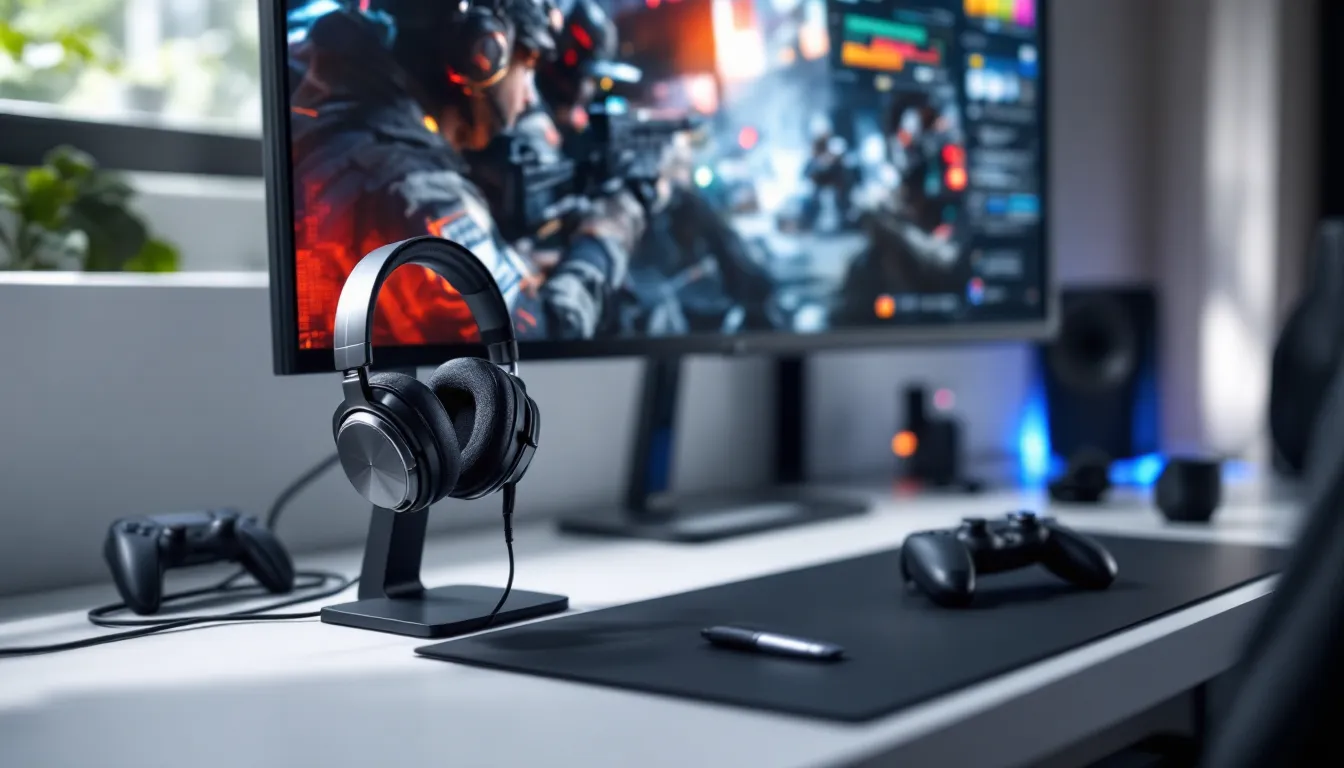

The PS5’s Tempest 3D Audio engine is a game-changer, but it’s only as good as the headset delivering it. Whether you’re tracking footsteps in competitive shooters or soaking in the atmospheric soundscapes of story-driven adventures, the right wireless gaming headset transforms your experience from ordinary to unforgettable.
But here’s the thing: not all wireless headsets are built equal for PS5. Some prioritize comfort over clarity, others nail the audio but fall short on battery life, and a few charge premium prices without delivering premium performance. With so many options flooding the market in 2026, cutting through the noise (pun intended) is tougher than ever.
This guide breaks down the best wireless gaming headsets for PS5 right now. We’re talking real-world performance, not marketing fluff, covering everything from budget-friendly picks to flagship models that justify their price tags.
Key Takeaways
- The best wireless gaming headset for PS5 should support Tempest 3D Audio, prioritize low latency (under 20ms), and deliver at least 20 hours of battery life for uninterrupted gaming sessions.
- SteelSeries Arctis Nova Pro Wireless and Sony Pulse Elite lead the premium category, while HyperX Cloud Alpha Wireless offers exceptional value with a stunning 300-hour battery life at budget-friendly pricing.
- Comfort and build quality are non-negotiable for long sessions—prioritize memory foam cushions, balanced weight distribution, and metal reinforcements to avoid fatigue and premature wear.
- A boom microphone with noise-canceling features outperforms built-in mics significantly, ensuring clear voice comms with squadmates without background noise interference.
- Optimizing Tempest 3D Audio settings, enabling personalized audio profiles, and configuring mic and chat balance in PS5 settings can dramatically improve your gaming experience beyond headset hardware alone.
- Use 2.4GHz wireless dongles for gaming rather than Bluetooth, which introduces 80-200ms latency that degrades competitive performance; troubleshoot interference by repositioning the dongle with line-of-sight to your headset.
Why Wireless Headsets Are Essential for PS5 Gaming
Let’s get straight to it: wireless freedom isn’t just a luxury anymore, it’s basically essential. The PS5’s design philosophy revolves around immersion, and nothing kills that vibe faster than a cable yanking your head mid-session or limiting how far you can lean back during those intense raid encounters.
Wireless headsets eliminate the tether without sacrificing audio quality, at least the good ones do. Modern 2.4GHz wireless tech delivers latency so low you won’t notice the difference from wired connections, which matters when milliseconds count in competitive play. Plus, USB-C connectivity on the PS5 makes pairing most dongles plug-and-play simple.
Beyond the practical benefits, there’s the couch-to-kitchen freedom factor. Need to grab a drink between matches? Keep the comms open. Got a massive TV setup? Sit wherever’s comfortable without cable reach dictating your spot. For long sessions, and let’s be honest, PS5 exclusives are built for marathons, wireless comfort is non-negotiable.
What to Look for in a PS5 Wireless Gaming Headset
Choosing the right headset isn’t rocket science, but it does require knowing which specs actually matter. Here’s what separates the contenders from the pretenders.
Audio Quality and Spatial Sound Support
Tempest 3D Audio compatibility is the baseline. Sony’s spatial audio tech is engineered to work with any stereo headset, but models specifically tuned for PS5 deliver noticeably better directional accuracy. Look for 40mm+ drivers as a starting point, bigger isn’t always better, but quality drivers in that range tend to deliver fuller bass and clearer highs.
Frequency response matters less than marketing suggests (most human ears can’t fully use the 20Hz-20kHz range anyway), but pay attention to whether a headset supports virtual surround modes like DTS Headphone:X or Dolby Atmos. While Tempest handles the heavy lifting, these can add dimension when gaming on other platforms.
One thing audiophiles will notice: wireless compression. The best headsets in 2026 use advanced codecs that minimize quality loss, though you’ll still find purists swearing by wired connections for competitive play.
Battery Life and Charging Speed
Anything under 20 hours is a hard pass unless you enjoy mid-session charging anxiety. Premium models are pushing 30-40 hours now, which means charging once a week even for heavy users.
USB-C charging is standard (and convenient for PS5 owners), but check if it supports fast charging. Some headsets hit 3+ hours of playtime from a 15-minute charge, which is clutch when you forgot to plug in overnight.
Battery degradation is real, lithium-ion cells lose capacity over time. Headsets with replaceable batteries are rare but worth considering if you plan to keep your gear for years.
Comfort and Build Quality for Long Gaming Sessions
You can have pristine audio and 50-hour battery life, but if your headset feels like a vice after an hour, it’s useless. Memory foam ear cushions and adjustable headbands are must-haves. Look for breathable materials if you tend to run hot, leatherette looks premium but can get swampy during summer raids.
Weight distribution matters more than total weight. A 350g headset that balances well beats a poorly designed 280g model that puts all the pressure on your crown. Clamping force is subjective: try before you buy if possible, or check return policies.
Build materials tell you about longevity. Plastic isn’t necessarily bad (some engineering polymers are incredibly durable), but metal reinforcements at stress points, hinges, headband adjusters, prevent the dreaded snap that kills so many headsets prematurely.
Microphone Performance and Voice Chat Clarity
Your squadmates will judge you by your mic quality. Tinny, muffled comms are frustrating: background noise and mouth-breathing are unforgivable.
Boom mics consistently outperform built-in options. Retractable or detachable designs offer flexibility, boom it out for raids, tuck it away for solo play. Look for noise-canceling or noise-rejecting features: the difference between picking up every keyboard click versus just your voice is massive.
Frequency response around 100Hz-10kHz captures voice clearly without unnecessary low-end rumble or harsh highs. Some headsets include sidetone (hearing your own voice in the headset), which helps you modulate volume naturally instead of shouting.
Monitor mode or ambient sound pass-through is a nice bonus for staying aware of your surroundings without removing the headset.
Top Wireless Gaming Headsets for PS5 in 2026
Let’s cut to the chase. These are the headsets actually worth your money in 2026, tested across different price brackets and use cases.
Best Overall: Premium Performance and Versatility
SteelSeries Arctis Nova Pro Wireless continues to dominate as the all-rounder champion. The dual-battery system is genius, hot-swap batteries via the charging base station and never worry about downtime. Audio quality is exceptional with 360° Spatial Audio, and the PS5-specific tuning makes Tempest effects pop.
The active noise cancellation (ANC) is console-headset rare and genuinely effective at blocking out environmental noise. Build quality feels tank-like with aluminum and steel construction, while the AirWeave cushions somehow manage breathability without sacrificing comfort.
Battery life hits 44 hours per charge (22 hours with ANC on), and the onboard EQ controls via OLED display let you tweak sound on the fly without diving into menus. It’s pricey at around $350, but you’re getting flagship performance across every metric.
Compatibility extends to PC, Xbox, Switch, and mobile via Bluetooth simultaneously, making it the ultimate multi-platform investment.
Best Budget: High-Quality Sound Without Very costly
HyperX Cloud Alpha Wireless punches way above its $200 price point. The standout feature? An absolutely absurd 300-hour battery life. That’s not a typo. Charge it once a month and forget it exists.
Audio performance uses HyperX’s Dual Chamber Drivers to separate bass frequencies from mids/highs, resulting in surprisingly clean separation for the price. It won’t match $400 flagships, but for competitive shooters and action games, directional accuracy is solid.
Comfort is typical HyperX, memory foam, durable leatherette, proven ergonomics that disappear during long sessions. The mic is detachable (always a plus), though quality is serviceable rather than spectacular.
Downsides? It’s PS5/PC only via the 2.4GHz dongle, no Bluetooth, no Xbox compatibility. And it’s a bit bulky. But for pure value and never-charge convenience, it’s unbeatable.
Best for Competitive Gaming: Low Latency and Precision Audio
Audeze Maxwell brings planar magnetic drivers to wireless gaming, and the difference is immediately noticeable if you’ve got trained ears. Audio imaging is razor-sharp, perfect for tracking enemy positions in Warzone, Apex Legends, or Rainbow Six Siege.
Latency sits at an imperceptible sub-10ms over 2.4GHz wireless, and the 90mm planar drivers deliver detail that standard dynamic drivers miss. You’ll hear subtle audio cues, reloads, ability charges, directional rustling, that give you a competitive edge.
Battery life reaches 80+ hours, and build quality is premium without being flashy. The broadcast-quality boom mic is shockingly good, clear enough for streaming without a standalone mic.
The catch? It’s hefty at 490g, which some users find fatiguing. And at $300-$330, it’s a competitive gamer’s tool, not a casual purchase. Platform support includes PS5, Xbox, Switch, PC, and mobile.
Best Premium: Flagship Features and Unmatched Immersion
Sony Pulse Elite is PlayStation’s 2026 answer to third-party dominance. Built specifically for PS5’s Tempest 3D Audio, it leverages planar magnetic drivers and AI-enhanced spatial processing that’s frankly unfair for single-player experiences.
Games like God of War Ragnarök, Horizon Forbidden West, and The Last of Us Part II sound revelatory, environmental audio wraps around you with precision that makes standard headsets feel flat. The retractable boom mic uses AI noise rejection to filter out everything but your voice, even in chaotic environments.
Lossless audio via PS Link (Sony’s proprietary wireless protocol) eliminates compression artifacts entirely. Battery life is solid at 30 hours, and USB-C fast charging gets you 5 hours from a 10-minute charge.
The premium feel extends to every detail: memory foam with cooling gel, titanium headband, touch controls on the ear cups. At $250, it’s positioned as the definitive PS5 headset, and if you’re ecosystem-committed, it delivers.
Limitation? It’s PlayStation/PC focused. Bluetooth support is there for mobile, but you’re buying this for PS5 first.
Best Multi-Platform: Seamless Switching Between Devices
Razer Barracuda Pro is the choice for gamers who refuse to be tied to one ecosystem. Simultaneous dual wireless lets you connect via 2.4GHz dongle (PS5, PC, Switch) and Bluetooth (phone, tablet) at the same time, take a call mid-game without disconnecting.
Audio quality uses Razer’s TriForce 50mm drivers with THX Spatial Audio support, delivering punchy bass and clear highs across all platforms. The versatile controller options pair well with this headset for comprehensive cross-platform setups.
Hybrid ANC blocks external noise effectively, and the detachable HyperClear mic is good enough for professional calls, not just gaming. SmartSwitch automatically prioritizes audio sources, game audio dips when a call comes in, then resumes seamlessly.
Battery hits 40 hours (wireless), and the foldable design with hard case makes it genuinely travel-friendly. At around $250, it’s priced competitively for the flexibility offered.
Trade-off? It’s good at everything but doesn’t dominate any single category. If you need the absolute best competitive audio or premium build, specialists edge it out. But for platform-hoppers, nothing beats the convenience.
How PS5 Tempest 3D Audio Enhances Your Gaming Experience
Sony’s Tempest 3D AudioTech isn’t just marketing spin, it’s a custom audio processing unit built into the PS5 that simulates hundreds of sound sources simultaneously. The result is spatial audio that rivals high-end surround systems through standard stereo headphones.
Tempest works by modeling how sound waves interact with your head and ears (HRTF, Head-Related Transfer Function). The PS5 ships with several preset profiles, and there’s a personalization feature in settings that tailors audio to your specific hearing. It’s worth spending 10 minutes on setup: the difference between generic and personalized profiles is substantial.
In practice? Games designed for Tempest, most PS5 exclusives, place audio cues with pinpoint accuracy. Rain falls from above and splashes around your feet. Dialogue comes from character positions, not a generic center channel. Footsteps circle behind you with enough precision to react before threats appear on-screen.
Not all games leverage Tempest equally. Titles like Returnal and Demon’s Souls use it masterfully to build tension and guide exploration. Older PS4 games or ports may not take full advantage, though the engine still enhances standard stereo output.
Key point: Tempest works with any stereo headset, wireless or wired. You don’t need Sony-branded gear. But, headsets tuned specifically for PS5 (like the Pulse Elite) or those with wide soundstages tend to showcase Tempest’s capabilities more dramatically.
Wireless Connection Options: USB-C vs 2.4GHz Dongle vs Bluetooth
Wireless connectivity isn’t one-size-fits-all, and understanding the differences prevents frustrating compatibility issues and latency complaints.
2.4GHz Wireless Dongles are the gold standard for gaming. Proprietary protocols from manufacturers deliver latency under 15ms, functionally indistinguishable from wired. The PS5’s USB-C and USB-A ports accommodate most dongles, and many headsets now ship with USB-C adapters.
Range typically extends 30-40 feet with line of sight, though walls and interference can reduce that. Battery efficiency is excellent since the connection isn’t negotiating with other Bluetooth devices. Downside? The dongle occupies a USB port, which matters if you’re juggling external drives and charging stations.
USB-C Direct Connection (via cable, not wireless) offers lossless audio and unlimited playtime but defeats the purpose of buying wireless. Some headsets support this as a backup when batteries die, handy, but if you’re regularly using it, you bought the wrong headset.
Bluetooth is convenient for mobile and multi-device scenarios but introduces latency (80-200ms typically). That’s fine for single-player story games or casual sessions but immediately noticeable in competitive shooters where audio sync matters. According to peripheral testing data, Bluetooth aptX Low Latency codec drops delay to around 40ms, which is acceptable but still not ideal.
Some 2026 headsets support simultaneous connections, 2.4GHz to PS5, Bluetooth to phone, letting you take calls or hear notifications without disconnecting from your game. It’s a killer feature if you multitask or stream.
PS Link (Sony’s proprietary protocol introduced with Pulse Elite) promises lossless wireless exclusively for PS5. Early testing shows it’s legit, but it locks you into PlayStation ecosystem compatibility.
Gaming Performance: Latency, Range, and Interference Considerations
Let’s talk about what actually impacts your gameplay, because fancy specs mean nothing if your audio cuts out mid-clutch.
Latency is the delay between an action happening and you hearing it. For gaming, anything under 20ms is imperceptible. Quality 2.4GHz wireless headsets consistently deliver 10-15ms. Bluetooth, even with aptX LL, struggles to break 40ms. The difference feels subtle in third-person RPGs but ruins rhythm games and competitive shooters where audio cues dictate reactions.
Latency can spike if your setup includes multiple wireless devices competing for bandwidth, especially if you’re running Wi-Fi on the same 2.4GHz frequency. 5GHz Wi-Fi routers or wired ethernet for your PS5 eliminate this interference almost entirely.
Range specs are tested in ideal conditions (open air, no obstructions). Real-world performance? Expect about 20-25 feet through typical walls before signal degrades. Dense materials like brick or metal studs kill range faster than drywall. If your setup involves gaming far from your console, invest in headsets known for strong antennae and signal stability.
Interference is the silent killer. Other 2.4GHz devices, wireless keyboards, mice, baby monitors, even microwaves, can cause audio dropouts or crackling. Many recent analyses by audio equipment reviewers highlight this as a common complaint in crowded wireless environments.
Solutions? Use dongles with frequency-hopping algorithms (most quality gaming headsets have this). Position the dongle with direct line-of-sight to your headset when possible, USB extension cables help if your console is stuffed in an entertainment center. And turn off devices you’re not actively using.
Packet loss manifests as brief audio dropouts. It’s usually a sign of weak signal, interference, or a failing dongle. Before trashing your headset, test with a different USB port, update firmware, and minimize obstructions between dongle and headset.
Optimizing Your Wireless Headset Settings on PS5
Out-of-the-box settings are rarely optimal. Here’s how to squeeze every bit of performance from your headset.
Start with Tempest 3D Audio personalization. Navigate to Settings > Sound > Audio Output > Headphones, and run through the profile selection. The PS5 plays test audio from five positions: pick the profile that sounds most distinct. It takes two minutes and noticeably improves spatial accuracy.
Under Output Device settings, ensure your headset is selected as the primary output (this should be automatic with wireless dongles, but always verify). Set Chat Audio to “All Audio” if you want game sound and chat mixed in your headset, splitting them is useful for streamers routing chat separately, but most players want everything unified.
Adjust Chat Mix to balance game audio versus voice comms. Default is centered: sliding toward “Chat Audio” helps in noisy multiplayer matches where callouts get drowned out. For single-player or quiet co-op, bias toward “Game Audio.”
Many headsets have companion apps (SteelSeries Sonar, Razer Audio, HyperX NGENUITY). Install these on PC or mobile to access EQ presets and custom profiles. Common adjustments:
- Boost mid-high frequencies (2kHz-8kHz) to emphasize footsteps and gunfire in competitive FPS games
- Increase bass (60Hz-250Hz) for immersive action games and explosions
- Flat/neutral EQ for story-driven games where you want audio as developers intended
Microphone settings matter if you’re in squads. Test sidetone levels, too low and you’ll shout: too high and it’s distracting. Enable noise gate if your headset supports it to cut breathing and background hum when you’re not talking.
Firmware updates are unglamorous but critical. Manufacturers regularly patch bugs, improve latency, and enhance compatibility. Check every few months, especially if you experience new issues after a PS5 system update.
Finally, disable unused wireless features. If you’re not using Bluetooth simultaneously with 2.4GHz, turn it off to conserve battery. Same with RGB lighting, it looks cool but drains power faster.
Common Issues and Troubleshooting Tips
Wireless headsets introduce variables that wired gear doesn’t. Here’s how to fix the most frequent problems without losing your mind.
Audio cutting out or crackling: This is almost always interference or weak signal. Move the USB dongle to a front-facing USB port if it’s buried in the back. Use a USB extension cable to position it closer with line-of-sight. Turn off nearby 2.4GHz devices temporarily to test if interference is the culprit. Update headset firmware, seriously, manufacturers fix signal issues via patches constantly.
Headset won’t connect to PS5: Ensure the dongle is fully inserted and the headset is charged (dead batteries won’t pair, obviously). Try a different USB port. Some headsets require a manual pairing button hold, check your manual. If the PS5 recognizes the dongle but audio doesn’t work, go to Settings > Sound > Audio Output and manually select the headset.
Poor battery life: Lithium-ion batteries degrade over time. After 300-500 charge cycles (roughly 1-2 years of heavy use), expect 20-30% capacity loss. Avoid letting batteries fully drain repeatedly, lithium-ion cells prefer partial discharge cycles. Store headsets at around 50% charge if you’re not using them for extended periods. Features like enhanced controller rumble drain batteries faster: disable RGB lighting and ANC when you don’t need them.
Microphone not working or low volume: Check PS5’s Adjust Microphone Level in Settings > Sound > Microphone. Some headsets default to muted or low sensitivity. Verify the boom mic is fully extended/clicked into place, many have physical mute switches on the boom itself. In party chat, ask squadmates to check their volume settings: sometimes the issue is on their end.
One ear cup silent or imbalanced audio: This can be hardware failure (broken driver or wire) or a software glitch. Test the headset on another device (PC, phone) to rule out PS5-specific issues. Check audio balance settings in PS5 Sound options, occasionally these get nudged accidentally. If confirmed hardware, most manufacturers honor 1-2 year warranties.
Uncomfortable after short use: Adjust the headband to sit higher or lower, pressure points vary by head shape. Swap ear cushions if your model supports it (third-party memory foam or velour options exist for popular headsets). Take breaks, even the most comfortable headset can cause fatigue after 4+ hour sessions.
Latency in menus or audio lag: Update PS5 system software and headset firmware. Restart both devices, wireless connections sometimes accumulate latency over extended uptime. If lag persists in specific games, it may be game-side audio processing rather than headset fault. Community forums for titles like PlayStation exclusives often document game-specific audio bugs and workarounds.
Conclusion
The best wireless gaming headset for PS5 in 2026 depends on what you value most, whether that’s battery life that lasts forever, competitive-grade audio precision, multi-platform versatility, or flagship features that justify premium pricing. The good news? You don’t need to compromise as much as you used to. Even budget options deliver solid performance, and the gaps between mid-tier and flagship models are narrowing.
Tempest 3D Audio does the heavy lifting, but the right headset unlocks its full potential. Prioritize comfort if you’re logging long sessions, invest in low latency if you’re competitive, and don’t sleep on battery life, nothing kills immersion like hunting for a charging cable mid-raid.
Whichever headset you choose, take the time to dial in settings and optimize your PS5’s audio output. The difference between default and personalized configs is night and day, and you’ve already invested in quality gear, might as well make it sing.